|
Hey Reader, in today's edition:
- NEM v ASX
- Solving the misinformation problem
- Consumers trading up on batteries
|
|
|
|
NEM review contracts idea 'reinventing the wheel'
Recently-launched ASX morning and evening peak electricity futures have seen limited trading, as innovators in the over-the-counter market query why they're reinventing the wheel.
The issue feeds into a much bigger debate over the design of the new long term NEM contracts to back clean energy projects, along with a “market-making obligation” to compel large market participants to back them.
|
Expert view
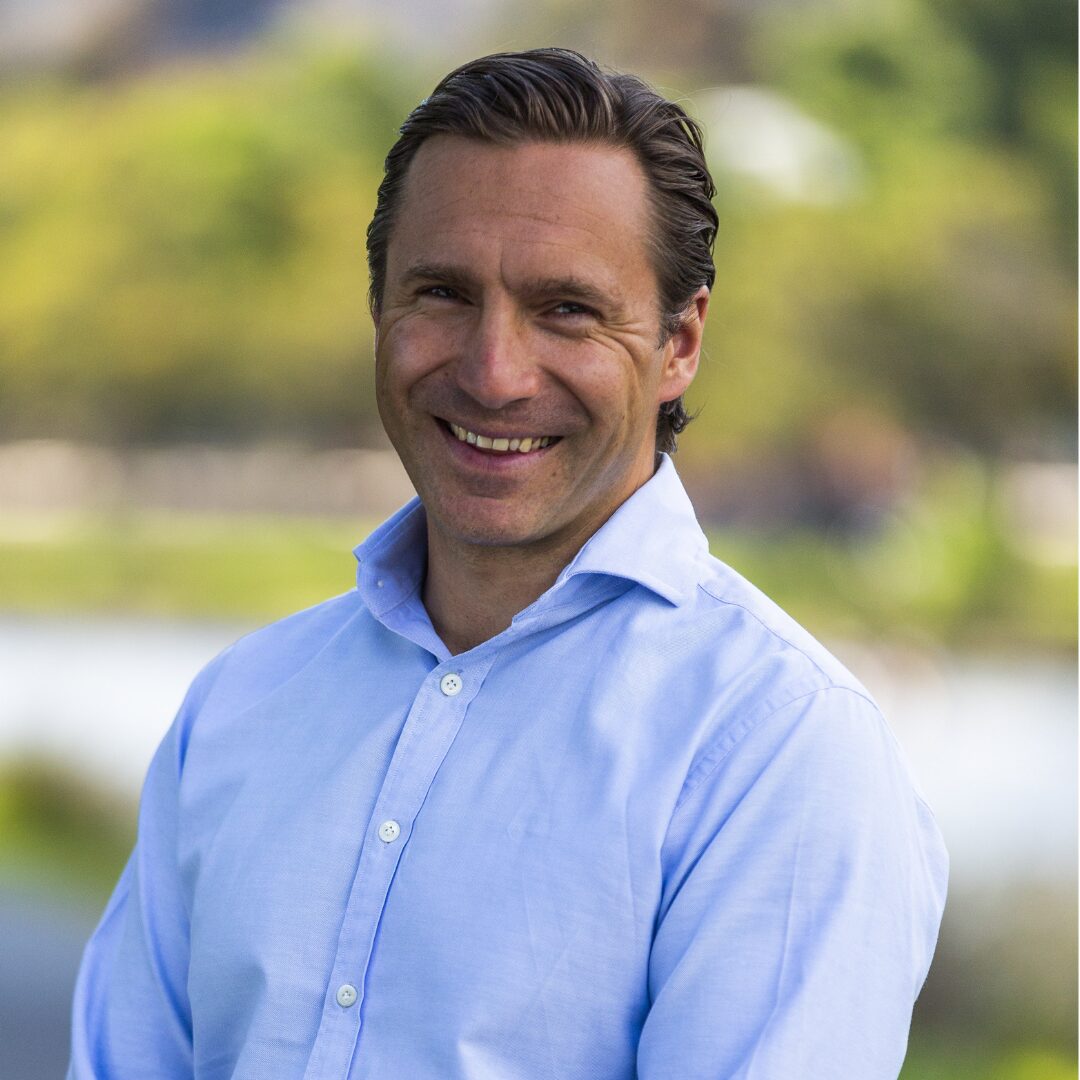
"The key attribute of whatever contracts are determined for energy, shaping and firming is not what they are, or where they are traded, it is that they are bankable in a financeable revenue stack. This needs to be attribute number one.
The problem we've got in the current market is that project finance banks on run-of-meter power purchase agreements and forecasting models, and the run-of-meter power purchase agreements are only happening at the discretion and frequency as per the market decides.
And so if this is going to take it out of the hands of the market and put it in the hands of the government to pick the projects .... then it needs to ensure that they're fundamentally bankable, and transparent. Otherwise it just won't progress the projects to financial close. I think that's still the bit that is at risk of being missed.”
|
Chris Halliwell
CEO, CORE Markets
|
|
Filling the information vacuum
Australian Energy Infrastructure Commissioner and former National Farmers’ Federation CEO Tony Mahar sees a role for his office in being an "independent, trusted source of information” on the energy transition.
At a hearing of the Senate Select Committee delving into the prevalence and impacts of misinformation and disinformation related to climate change and energy, Mahar said such information was "desperately needed” by communities hosting energy projects.
“Through our work, we're well placed to provide independent insights into broader community concerns and sentiments regarding the energy transition,” Mahar said.
The Commissioner is planning to provide “policy positions” on issues including decommissioning, fire risk, taxation and insurance, all of which have been issues community members have raised with him during in-person meetings.
Mahar said there were also opportunities for better information to be provided to communities on how to engage with government planning processes, such as how the planning system works, who has jurisdiction over different parts of the process, and how community members can involve themselves in it, “because it's an opaque process at best”. The Committee is due to present its final report by February 4, 2026.
|
Expert view
“The energy transition involves significant disruption and uncertainty for host communities, and as such, there are genuine issues and concerns that must be addressed, acknowledged and resolved. In my view, if these genuine issues and gaps in information are not adequately addressed in a timely manner, it provides fertile ground for mis- and dis-information to take hold, which makes an incredibly difficult task much more difficult than it needs to be.
In addition to community engagement concerns, our office is increasingly hearing concerns on issues such as fire risk, the impact on the natural environment; the impact from potentially harmful material such as microplastics, heavy metals, chemicals that might or might not be used in relation to renewable energy; infrastructure insurance liabilities; aviation; road safety; human health concerns; economic loss, land devaluation or valuation; decommissioning; taxation and all benefits of compensation. These and other concerns are anxieties that can be exacerbated by lack of understanding or trust and fueled by misinformation."

|
Tony Mahar
Australian Energy Infrastructure Commissioner
|
|
Research undertaken by the Net Zero Economy Authority in 2024 found that misinformation and disinformation about the energy transition was “highly believable and widespread in impacted regional communities”.
In its submission to the inquiry, the NZEA said the research also found that proof points designed to address existing misinformation were seen as less credible when participants had already been exposed to misinformation. Proof points aimed at dismissing misinformation were found to have little impact on those who support the transition and aggravated those who oppose it. The Authority is now in the process of undertaking further research on the issue.
|
Super size me say consumers
Individual home batteries and rooftop solar are being supersized over time in response to the federal government’s Cheaper Home Batteries Program, according to the latest data on subsidised installations.
More than 40,619 battery installations with a total capacity of 725MWh were validated by the Clean Energy Regulator through to mid-September, against applications amounting to more than one GWh of capacity.
The regulator’s analysis of the first full two months of solar batteries data shows a large group (47%) are using the opportunity to connect their new battery to a replacement, addition or extension solar PV system — a sizable increase on the 29% of solar PV installations in Q2 2025 that were replacements, additions, or extensions.
And households and businesses with bigger solar PV systems tend to install bigger batteries. So far, the average capacity of CER-validated batteries is 15kWh.
Meanwhile, Green Energy Markets analysis of Small-scale Technology Certificate registry data shows the average battery size is on the rise.
“We have consistently been registering 1000 to 1200 valid battery systems per weekday since the third week of July up to last week although with the odd day recently cracking above 1400 systems. The average system size has been growing slowly with the 7 day moving average indicating the average system being registered now is slightly above 20kWh. Total capacity registered is now around 1300MWh.”
Tristan Edis
Director - Analysis and Advisory, Green Energy Markets
|
|
|
|
Catch Up

Capital
|
Western Australian fertiliser company Yara Pilbara signed an MOU with Japanese engineering company Mitsubishi Heavy Industries to replace the natural gas being used at its ammonia plant in the Burrup Peninsula. The collaboration will explore post-combustion carbon capture and hydrogen and ammonia combustion technologies. (Argus Media)
 Projects
|
Before its approval, conditions for Woodside’s huge North West Shelf gas facility were watered down by the Federal Government after the energy giant warned it could jeopardise the future of the project. Ensuring “no emissions above the detectable limit that impact rock art” by 2030 was deemed too onerous by Woodside. (AFR) (ABC)
Victoria’s Merri-bek Council launched a new trial of home-to-street EV charging using boom-mounted chargers. The solution is designed for people without off-street parking.
Neoen’s 200MW Narrogin wind farm project in Western Australia received final planning approvals. (Renew Economy)

Policy
|
Reservation of gas from new projects alone is unlikely to deliver the gas prices that Australian industry needs to be competitive, writes BlueScope chief executive Mark Vassella in the AFR. He calls for one-third of current east coast gas production to be reserved along with government support for investment in gas pipelines and storage.

Regulation
|
Installers of consumer energy resources should be required to become members of state-based ombudsman schemes, according to consumer group Energy Consumers Australia. In its submission to the draft Prototype – National Technical Regulatory Framework for CER, ECA also says installers should be regulated beyond the technical elements of their role to include all interactions with the consumer. This would include recommending further CER products, calculation of payback periods and advice about electrification and disconnecting from the gas network.

Climate
|
Half of global greenhouse gas emissions are now covered by a 2035 climate pledge according to Carbon Brief analysis in the wake of last week’s UN summit. New NDC target announcements made during the event came from China (which accounts for 29% of global emissions), Russia, Turkey, Palau, Tuvalu, Kyrgyzstan, Peru, São Tomé and Príncipe, Fiji, Bangladesh and Eritrea. Despite this, two-thirds of nations have still not submitted their 2035 climate pledges, including major emitters India, Indonesia and Mexico.
Electricity demand on the island of Great Britain has been fully covered by clean-energy sources for a record 87 hours in 2025 to date. The Carbon Brief analysis says this puts the government on track to meet its clean-power target of 95% by 2030.

People
|
Tailored training and pathways to skilled clean energy jobs for women are part of a new project that will receive $1 million from the Albanese government’s $60 million Building Women’s Careers (BWC) program. The “Powering her Pathway” project was launched at ENGIE and Eku Energy's Hazelwood Battery in Morwell
German PV monitoring company metrocontrol appointed Jawad Sayed as its new Regional Manager for Australia and the Oceania region.

Random
|
The US Energy Department added “climate change,” “green” and “decarbonisation” to its growing “list of words to avoid” according to an email obtained by Politico.
|
|
|
|
What's On
October 1
ANU Energy Update: Getting to net zero
Grattan Institute Energy and Climate Change Program Director Alison Reeve will chair this hybrid event featuring Climate Change Authority Deputy CEO Eliza Murray, ANU Crawford School of Public Policy Associate Professor Rebecca Colvin and ANU Deputy Director, School of Engineering, Associate Professor Marnie Shaw.
October 2
The COP drop: The latest on Australia's role and opportunity
Climate and diplomacy expert Dean Bialek will join Clean Energy Investor Group CEO Richie Merzian, Pacific Community-SPC Director of Climate Change and Sustainability Coral Pasisi and Climateworks Centre System Lead for Sustainable Communities Kylie Turner at this webinar from The Energy, moderated by The Energy Advisory Board Member Dan Cass.
October 7-8
NEM Development Conference 2025
EnergyAustralia Managing Director Mark Collette and Powerlink CEO Paul Simshauser will headline this Brisbane event hosted by Griffith University and UQ, which will also feature Queensland Farmers Federation CEO Jo Sheppard, NEM Review panel Chair Tim Nelson, Victoria Energy Policy Centre Director Bruce Mountain, University of Sydney Professor of Law Penny Crossley, Iberdrola GM Regulation & Energy Policy Joel Gilmore and Global Roam CEO Paul McArdle.
October 15
The Energy Q&A with the NEM Review panel
NEM Review panel Tim Nelson, Paula Conboy, Ava Hancock and Phil Hirschhorn will speak at this webinar moderated by The Energy Advisory Board Member Anna Hancock.
October 16-17
IGCC Summit 2025: Decoding the transition
Generation Investment Management Founding Partner and former US Vice President Al Gore will headline this Sydney event from the Investor Group on Climate Change. Other speakers include NSW Energy Minister Penny Sharpe, Climate Change Authority Chair Matt Kean, Energy Efficiency Council CEO Luke Menzel, ARENA Associate Director Tanya Hodgeson and Net Zero Economy Agency CEO David Shankey.
October 29-30
All Energy Australia
Victorian Energy Minister Lily D’Ambrosio, incoming Clean Energy Council CEO Jackie Trad and Pacific Green CEO Joel Alexander are among the speakers at this year’s All Energy event in Melbourne.
|
|
|
|